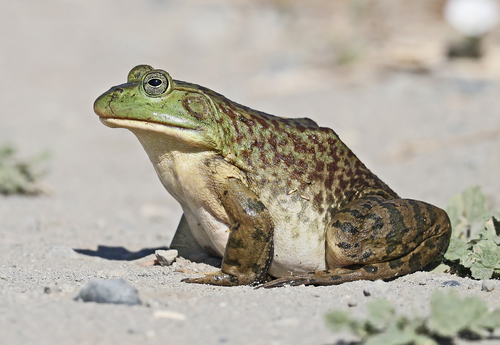
American Bullfrog
Lithobates catesbeianus
Conservation Status
Least ConcernAmphibia · Anura · Ranidae
About
The American bullfrog, often simply known as the bullfrog in Canada and the United States, is a large true frog native to eastern North America. It typically inhabits large permanent water bodies such as swamps, ponds, and lakes. Bullfrogs can also be found in manmade habitats such as pools, koi ponds, canals, ditches and culverts. The bullfrog gets its name from the sound the male makes during the breeding season, which sounds similar to a bull bellowing. The bullfrog is large and is commonly eaten throughout its range, especially in the southern United States where they are plentiful.
Fun Fact
Maximum lifespan in the wild is estimated to be 8 to 10 years, but one frog lived for almost 16 years in captivity.
Quick Facts
Habitat
Native to eastern North America, where it is commonly found in every U.
Diet
Prey on any small animal they can overpower and consume.
Lifespan
10 years
Threats
- Habitat Change
- Human Disturbance