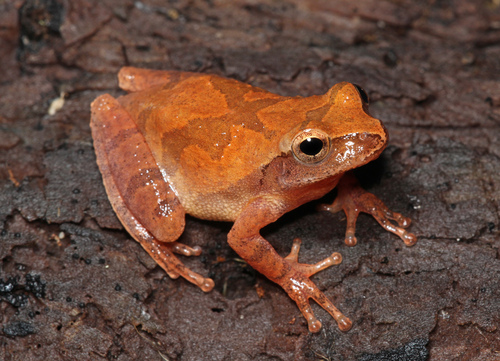
Spring Peeper
Pseudacris crucifer
Conservation Status
Least ConcernAmphibia · Anura · Hylidae
About
The spring peeper is a small chorus frog widespread throughout the eastern United States and Canada. It prefers permanent ponds due to its advantage in avoiding predation; however, it is very adaptable with respect to the habitat it can live in. In northern regions, the frog is able to endure below freezing temperatures due to the capacity of its liver to exude and flush the bloodstream with a glucose cryoprotectant which acts both as an anti-freeze in its blood, and allows organs like the heart to enter into a state of protected dormancy. The peeper earned its name from its chirping call, which marks the beginning of spring. Crucifer is derived from the Latin root meaning "cross-bearing", a reference to the cross-like pattern on the spring peeper's dorsal side.
Fun Fact
The high-pitched chorus of spring peepers is so loud that a single pond of thousands can be heard from over a mile away.
Quick Facts
Habitat
Live primarily in forests and regenerating woodlands near ephemeral or semipermanent wetlands.
Diet
Feed on algae and other organisms in the water.
Lifespan
To be updated
Threats
- Habitat Change
- Human Disturbance