Fire Salamander
Salamandra salamandra
Conservation Status
Near ThreatenedAmphibia · Caudata · Salamandridae
About
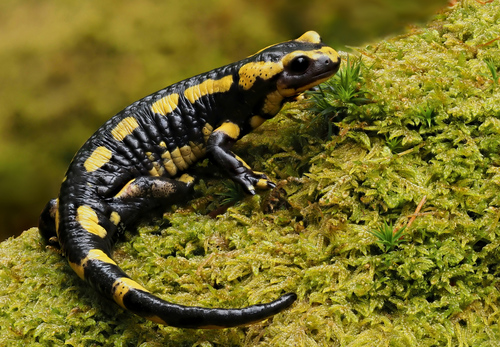
The fire salamander (Salamandra salamandra) is a common species of salamander found in Europe. It is black with yellow spots or stripes to a varying degree; some specimens can be nearly completely black while on others the yellow is dominant. Shades of red and orange may sometimes appear, either replacing or mixing with the yellow according to subspecies.
Fun Fact
Fire salamanders give birth to live larvae instead of laying eggs, and their striking yellow-and-black coloration is a warning to predators about their potent skin toxins.
Quick Facts
Habitat
Found in heterogeneous and shallow streams with scarce periphyton (a type of algae) and rich macrobenthos (aquatic invertebrates), characteristic of oligotrophic water.
Diet
Diet of the fire salamander consists of various insects, spiders, millipedes, centipedes, earthworms and slugs, but they also occasionally eat newts and young frogs.
Lifespan
50 years
Threats
- Habitat Change
- Human Disturbance